Rufus Peabody
In the evolving world of sports betting, few names carry as much analytical credibility as Rufus Peabody. Known for blending sharp mathematical insight with disciplined bankroll management, Peabody has carved out a reputation as one of the most respected advantage bettors in the industry. From Mathematics to Markets Rufus Peabody’s background is rooted in math and statistics, which naturally led him toward betting markets. Unlike casual bettors who rely on intuition or fandom, Peabody approaches wagering like a financial analyst approaches the stock market—seeking inefficiencies, pricing errors, and long-term expected value (+EV). He gained early recognition through his work in sports analytics and later became widely known as the co-founder of Massey-Peabody Analytics, a firm specializing in predictive modeling for sports outcomes. His models are designed to identify edges before sportsbooks adjust, which is the foundation of profitable betting. The +EV Philosophy At the core of Peabody’s strategy is +EV betting. Rather than chasing wins, he focuses on making bets where the probability of success is greater than what the odds imply. This approach requires discipline, patience, and a willingness to lose in the short term for long-term gain. Peabody often emphasizes that winning bettors think in terms of thousands of bets—not individual outcomes. Variance is inevitable, but consistently placing +EV wagers leads to profitability over time. Market Awareness and Line Movement One of Peabody’s strengths is understanding how betting markets move. He closely monitors line movement, not just to find value but to understand why lines are shifting. This includes tracking sharp money, injury news, and public betting trends. He also stresses the importance of timing. Getting the best number—often referred to as beating the closing line—is a key indicator of long-term success. Bettors who consistently beat closing lines are typically making sharp, informed decisions. Bankroll Discipline Even with an edge, poor bankroll management can ruin a bettor. Peabody advocates for structured staking methods, often tied to the Kelly Criterion or similar models. The goal is to maximize growth while minimizing the risk of ruin. He warns against emotional betting, chasing losses, and overexposure on any single wager. For Peabody, discipline is just as important as finding value. Transparency and Education Unlike many professional bettors who operate quietly, Peabody has been relatively open about his methods. Through podcasts, interviews, and social media, he has helped educate a new generation of bettors on what it actually takes to win. He frequently breaks down misconceptions—such as the idea that betting is about picking winners rather than finding value—and encourages bettors to treat it as a skill-based, long-term endeavor. Final Thoughts Rufus Peabody represents a shift in sports betting from gut instinct to data-driven decision-making. His success is not built on luck or hot streaks, but on a repeatable process grounded in mathematics, discipline, and market awareness. For anyone serious about sports betting, studying his approach offers a clear takeaway: the edge isn’t in guessing—it’s in thinking differently than the market.
Jeff Ma: From Card Counter to Data-Driven Betting Mind

Casinos didn’t beat Jeff Ma. He walked away before they could. That detail matters, because most stories about gambling legends end in burnout, bans, or bankruptcy. Ma’s path looks different. He took a skill that once helped him win millions at blackjack tables and turned it into something far more durable, an edge built on data, discipline, and decision-making. This is not just a story about the MIT Blackjack Team. It is about what happens after the cards are put away. The MIT Blackjack Team Was Real, but Not What You Think Pop culture made the story famous through 21. It showed a group of brilliant students beating casinos with card counting, flashy wins, and high-stakes drama. Entertaining, yes. Accurate, not quite. Jeff Ma was part of that world, but the reality was more methodical than cinematic. The team operated like a business. There were investors. There were roles. Some players counted cards, others acted as “big players” who stepped in to place large bets when the odds shifted. It was structured, disciplined, and often boring. Card counting itself is not illegal, but casinos don’t like losing. That meant constant pressure. Players were backed off, watched, and sometimes banned. Success depended on staying unnoticed while executing a mathematically sound strategy over thousands of hands. Ma wasn’t just lucky. He was consistent. And consistency is what separates professionals from gamblers. The Real Skill Was Never Counting Cards Card counting gets all the attention, but it wasn’t the most valuable skill Ma developed. The real edge was decision-making under uncertainty. Every hand of blackjack is a small bet with imperfect information. Over time, those small edges compound. That mindset, making slightly better decisions again and again, translates far beyond a casino floor. Most people misunderstand advantage play. They think it is about beating the system in one big moment. It is not. It is about grinding out tiny advantages and trusting the math. That philosophy would later define Ma’s career. Leaving the Tables at the Right Time Many advantage players stay too long. The edge shrinks. Casinos adapt. Variance catches up. Discipline fades. Ma did something smarter. He pivoted. Instead of chasing diminishing returns in blackjack, he moved into analytics and business. He worked in tech, advised teams, and eventually brought his thinking into sports betting and media. His book, The House Advantage, lays out this transition clearly. It is less about gambling and more about how to think. The lessons apply to investing, business, and everyday decisions. That shift is what separates a good story from a valuable one. From Blackjack to Sports Betting and Analytics Sports betting looks different from blackjack on the surface, but the core idea is the same. Find mispriced opportunities and exploit them over time. Ma leaned into this space by focusing on data. Not gut feeling. Not hot streaks. Data. He also became a voice in the analytics movement, contributing to discussions around how teams and bettors can use information more effectively. His work connected gambling principles with mainstream decision-making. This is where many bettors get it wrong. They chase picks instead of building a process. They look for certainty in a space that only offers probabilities. Ma’s approach flips that. The goal is not to be right every time. The goal is to be right more often than the odds suggest. What Most Bettors Can Learn from Jeff Ma You do not need to count cards to apply his approach. In fact, you probably should not try. Casinos are better at detecting it now, and the barrier to entry is higher than people think. What you can take are the principles. 1. Think in probabilities, not outcomes A losing bet can still be a good decision. A winning bet can still be a bad one. Judge the process, not the result. 2. Small edges matter You are not looking for 10x wins. You are looking for slight advantages that repeat. 3. Discipline beats excitement Most losing bettors are not dumb. They are undisciplined. They chase losses, overbet, and abandon strategy. 4. Longevity is the goal If your approach only works in the short term, it does not work. These ideas sound simple. They are not easy to follow. The Myth of “Beating the System” There is a persistent idea that gambling success comes from cracking a code or finding a secret. That is not how it works. Even the MIT Blackjack Team did not “break” blackjack. They followed known math and executed it better than the average player. That is a big difference. The same applies to sports betting. There is no magic formula. There is only better information, sharper pricing, and stronger discipline. Hollywood sells shortcuts. Real advantage players build systems. Why His Story Still Matters Today It would be easy to file Jeff Ma’s story under “cool gambling history” and move on. That would miss the point. His career sits at the intersection of gambling, analytics, and decision science. Those fields are more relevant now than ever. Sports betting markets are sharper. Data is everywhere. Edges are smaller. That means the lessons matter more, not less. The modern bettor is competing against algorithms, not just bookmakers. The casual mindset does not survive in that environment. Ma’s approach, structured thinking, measured risk, and long-term discipline, is one of the few that still holds up. The Takeaway Most People Miss Jeff Ma did not win because he was the smartest person in the room. He won because he stayed consistent when others did not. He trusted math over emotion. Process over impulse. Long-term over short-term. That is not exciting. It is effective. If you are serious about betting, or any form of decision-making under risk, start there. Build a process. Track your results. Cut out emotion where you can. You do not need a casino team or a movie script. You just need an edge, and the discipline to stick with it.
Gadoon “Spanky” Kyrollos

In the world of high-stakes sports betting, few figures are as influential—and as unconventional—as Gadoon “Spanky” Kyrollos. Known for operating at scale and building a network of bettors rather than working alone, Spanky has become a central figure in modern betting circles. From Solo Bettor to Syndicate Builder Unlike many advantage players who rely strictly on individual skill, Spanky took a different route. He built a betting operation that functions more like a team or syndicate. By leveraging multiple accounts, bettors, and information sources, he’s been able to get down larger wagers and exploit market inefficiencies that smaller players simply can’t access. This approach allows for volume—one of the most important factors in professional betting. Even a small edge becomes highly profitable when applied across hundreds or thousands of bets. Beating the Limits One of the biggest challenges sharp bettors face is getting limited or banned by sportsbooks. Spanky addressed this by creating a decentralized betting network. Instead of relying on a single account, his operation uses multiple outlets to place bets, allowing him to continue getting action down even after books identify sharp activity. This model has become increasingly common among serious bettors, but Spanky was one of the early adopters who helped bring it into the spotlight. The Role of Data and Information Spanky’s success isn’t just about logistics—it’s also rooted in information. His network constantly tracks line movement, injury reports, and market signals. By reacting quickly and efficiently, his operation can capture value before odds adjust. Like other top bettors, he focuses heavily on closing line value (CLV). Consistently beating the closing number is a strong indicator that his bets are +EV, regardless of short-term results. Founding the Betting Community Spanky is also known for launching Bet Bash, one of the most well-known networking events in the sports betting industry. The event brings together professional bettors, bookmakers, and industry insiders to share insights, strategies, and connections. Through this, he’s helped legitimize sports betting as a professional pursuit and created a space where serious bettors can collaborate rather than operate in isolation. Transparency and Real Talk Spanky has built a reputation for being outspoken and direct about the realities of betting. He openly discusses issues like account limitations, sportsbook practices, and the challenges of sustaining long-term profitability. He often pushes back against the idea that betting is easy money, emphasizing instead the grind, discipline, and infrastructure required to succeed at a high level. Final Thoughts Gadoon “Spanky” Kyrollos represents a different kind of advantage player—one who understands that scale, structure, and access can be just as important as picking winners. His success highlights a key evolution in sports betting: it’s no longer just about individual skill, but about building systems that maximize opportunity. For serious bettors, the lesson is clear: finding an edge matters—but being able to execute that edge consistently and at scale is what separates professionals from everyone else.
Captain Jack Andrews
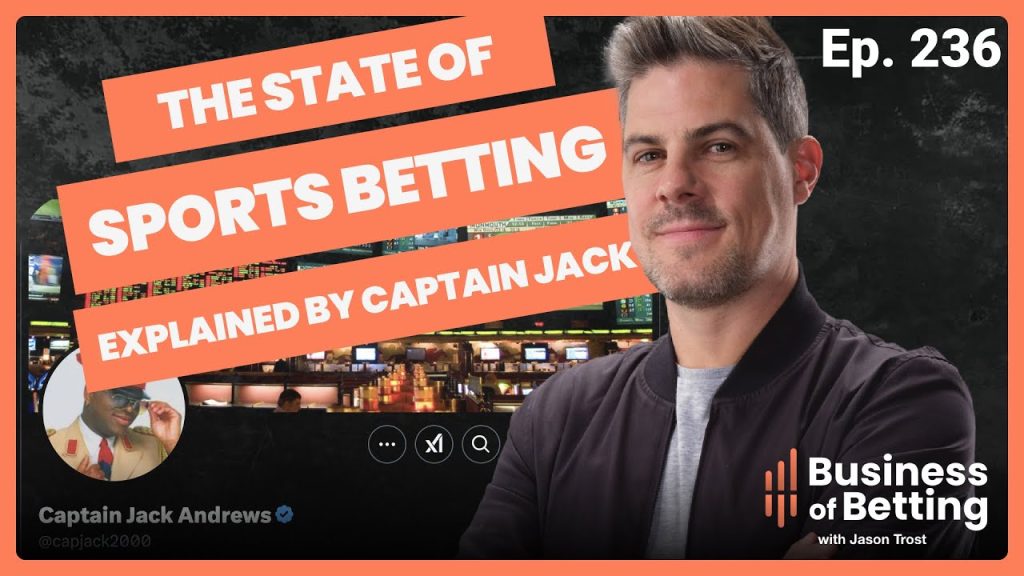
In the increasingly sophisticated world of sports betting, Captain Jack Andrews stands out not just as a winning bettor, but as one of the most influential teachers in the space. Known for his structured, no-nonsense approach, Captain Jack has helped thousands of bettors transition from guessing outcomes to understanding markets. From Advantage Player to Instructor Captain Jack built his reputation as a professional bettor, but his larger impact has come through education. Through his platform, Unabated, he provides tools, data, and training designed to help bettors think like professionals. Unlike many in the industry who guard their strategies, Captain Jack leans into teaching. His philosophy is simple: if bettors understand how markets work, they can make smarter, more disciplined decisions. Understanding the Market, Not the Game One of Captain Jack’s core teachings is that sports betting isn’t about predicting winners—it’s about understanding pricing. He emphasizes concepts like implied probability, expected value (+EV), and closing line value (CLV). Rather than asking “Who will win?”, he encourages bettors to ask, “Is this price wrong?” This shift in thinking separates recreational bettors from sharp ones. It turns betting from entertainment into a process driven by logic and math. The Power of Unabated Through Unabated, Captain Jack has built one of the most respected educational ecosystems in sports betting. The platform offers tools like odds comparison, calculators, and training modules that walk users through real betting scenarios. Unabated focuses heavily on transparency and repeatable processes—key elements for anyone trying to achieve long-term profitability. Discipline Over Emotion Captain Jack is also a strong advocate for discipline and bankroll management. He frequently warns against common pitfalls like chasing losses, overbetting, and relying on gut instinct. His approach is methodical: find value, size bets appropriately, and trust the process over time. Like other sharp bettors, he understands that variance is unavoidable, but poor discipline is optional. A Voice for the Modern Bettor In addition to his tools and training, Captain Jack has become a respected voice in the betting community. Through podcasts, interviews, and social media, he consistently reinforces the importance of treating betting as a skill-based endeavor. He also speaks openly about industry challenges, including sportsbook limitations and the importance of having multiple outs. Final Thoughts Captain Jack Andrews represents the educational backbone of modern sports betting. While many bettors focus on picks, he focuses on process—and that distinction makes all the difference. For anyone serious about improving, his message is clear: success doesn’t come from knowing more about sports. It comes from understanding the market better than the people setting the lines.