Sports Betting for Entertainment or Profit?

Most recreational bettors never actually choose. They open a sportsbook account with some loose notion of making a little money while making the games more interesting, and they never stop to ask which of those two things is actually driving them. That ambiguity feels harmless. It is not. Bettors stuck between the two mindsets consistently lose more than either the disciplined profit-seeker or the honest entertainment bettor, because they apply the logic of neither. The question is not which approach is better. Both are valid. The question is which one you are actually doing, and whether your habits match your answer. The Two Mindsets Are Further Apart Than They Look An entertainment bettor and a profit bettor can place the exact same wager on the exact same game and be doing completely different things. The entertainment bettor is buying a reason to care. The $25 on the Bears covering is not really about the $25. It is about the third quarter mattering when it otherwise would not. Winning feels good. Losing is the cost of the product. As long as the experience was worth the price, the transaction was a success. The profit bettor is running a process. The same $25 bet exists because they identified a line they believe is mispriced, sized the wager according to their bankroll rules, and are building toward a long-term record that can be evaluated for edge. Winning feels like confirmation. Losing feels like data, provided the process was sound. Same bet. Completely different relationship to the outcome. The problem starts when a bettor thinks they are the second type but is actually wired like the first. This is the uncomfortable part. A bettor who tracks their record obsessively, argues with their picks on social media, and feels genuine anger after a bad beat is not profit-motivated. They are ego-motivated. The money is keeping score, but what they actually want is validation that their football knowledge is real. That is an entertainment motive wearing a financial costume, and it is expensive to maintain because it leads to exactly the kind of emotional decision-making that produces bad bets. Chasing losses after a rough Sunday is not a profit behavior. It is an entertainment behavior, specifically the behavior of someone whose experience was unsatisfying and who wants a do-over. Betting a bigger number on Monday Night Football to “get right” after going 1-4 on the early games has no logical basis in any profit framework. But it makes complete sense if what you are really buying is the feeling of winning, and you have not gotten enough of it yet. Recognizing this in yourself is not an indictment. It just means you are an entertainment bettor, and there is a much healthier way to do that. If the honest answer is that you bet because it makes watching sports more engaging, the single most useful reframe is this: your losses are not a problem to solve. They are the price of the product. A person who spends $80 a month on a streaming service does not feel like they are losing $80. They feel like they are getting something for $80. Entertainment bettors who internalize that same logic, setting a monthly budget they are genuinely comfortable losing entirely, tend to enjoy betting far more and spiral far less. The bad beat still stings for a minute. It does not ruin the week. The practical setup is simple. Decide what you can afford to lose in a month without it affecting anything that matters. Bet in small, flat amounts that keep you in action for the full month. Stop tracking your record as a performance metric and start tracking it as a curiosity. When the budget is gone, it is gone. When it resets, you play again. What this is not: a license to bet recklessly. The budget has to be real. A number you set and then quietly ignore when you are down is not a budget. It is a suggestion, and suggestions do not protect you. For the bettor who genuinely wants to approach this as something closer to a skill game, the bar is higher than most people realize before they try it. Beating a sportsbook at -110 juice on sides and totals requires winning at least 52.4% of your bets just to break even. Consistently hitting 55% over a sample of 500 or more bets is considered genuinely good. Most recreational bettors who think they are profitable have never tracked enough bets over a long enough period to actually know their win rate. They remember the winning weeks and forget the losing ones, which is a completely human cognitive bias and a completely useless basis for evaluating whether you have an edge. Profit betting means keeping records, every bet, every line, every result, in a spreadsheet or a tracking app, over months and years. It means sizing bets as a consistent percentage of your bankroll, typically 1% to 3% per play, rather than going bigger when you feel confident and smaller when you are cold. It means being able to look at a losing month and evaluate whether your process was sound rather than just feeling bad about the number. None of that is impossible. It is just a different relationship to betting than most recreational bettors signed up for, and discovering that mid-season after a rough stretch is a painful time to find out. There is a practical test for this that is more honest than anything you will tell yourself in the abstract. Think about the last five bets you lost. How did you respond to each one? Did you note the result, move on, and evaluate whether your reasoning was sound? Or did you feel an immediate pull to place another bet, size up, or explain to someone why you were actually right and the result was bad luck? The first response is a profit bettor’s response. The second is an entertainment bettor’s response. Neither is a character flaw.
How to Read an Odds Screen Like a Professional Bettor
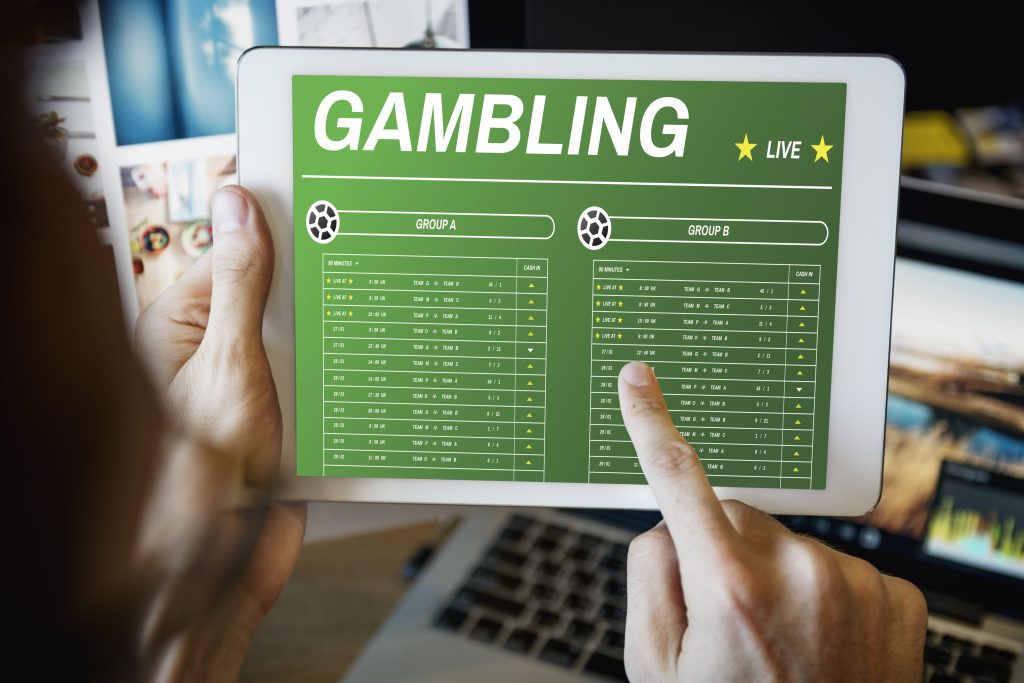
The first time most people open a sportsbook app, they stare at the screen for about ten seconds, find the team they want, and tap it. Everything else, the columns of numbers, the plus and minus signs, the fractions sitting next to each line, gets ignored. That approach works fine for placing a bet. It is a terrible approach for making a good one. Professional bettors read an odds screen the way a mechanic reads a diagnostic report. Every number is data. The question is knowing which data matters, in what order to read it, and what it is actually telling you about the game before you have formed a single opinion about who wins. Most recreational bettors look at the spread first. Professionals look at the juice first. Juice is the commission baked into the odds. On a standard bet, both sides are priced at -110, meaning you risk $110 to win $100. That gap between what you risk and what you win is how the sportsbook makes money regardless of the outcome. It is not a fee you pay once. It is a tax on every single bet you place, and it compounds over hundreds of wagers in a way that quietly destroys bankrolls. Here is why it matters before you even look at the line. If one side of a bet is priced at -110 and the other is at -115, the book is nudging you toward the -110 side. They have moved the price to make one option slightly more expensive, which typically means more money has come in on that side and they are trying to rebalance. That pricing tells you something about where the public is leaning before you have read a single injury report. A sharp bettor sees -115 on a side and immediately asks why. A casual bettor does not notice it at all. Every game on a standard odds screen presents three separate bets. Most bettors treat them as variations of the same question. They are not. The spread asks: by how much will the favorite win? A team listed at -6.5 needs to win by 7 or more for a spread bet on them to cash. The underdog at +6.5 covers if they win outright or lose by 6 or fewer. The spread is the book’s attempt to create a 50/50 proposition out of a game between unequal teams. The moneyline asks: who wins the game, period? No margin required. The catch is that the favorite costs more to back. A -220 moneyline favorite requires you to risk $220 to win $100. That price reflects the book’s implied probability, and -220 converts to roughly a 69% chance of winning. If you think the favorite wins 75% of the time, the moneyline has value. If you think they win 65% of the time, it does not. The total asks: will the combined score go over or under a specific number? Totals are largely independent of which team wins. A 34-31 game and a 17-10 game can both involve the same winner. Professionals who specialize in totals are often analyzing pace of play, weather, offensive line matchups, and defensive schemes rather than team quality in any traditional sense. Three numbers. Three different questions. Reading all three before placing any of them is the baseline habit that separates deliberate bettors from reflexive ones. Here is what most casual bettors walk past without realizing what they are seeing. Sportsbooks post opening lines, typically Sunday night or Monday morning for the following week’s NFL slate, and those lines move between opening and kickoff based on where the money goes. A line that opens Chiefs -3 and moves to Chiefs -4.5 by Friday has received significant action on Kansas City. A line that opens at -3 and moves back to -2.5 has received enough money on the underdog to push it the other direction. DraftKings, FanDuel, and most major sportsbooks display the current line. Tracking sites like Action Network and Covers show you the opening line alongside the current one, which means the movement is visible to anyone willing to look. That movement is as close as a recreational bettor gets to seeing where informed money went. A few things line movement can signal. A line moving toward the favorite despite heavy public betting on the underdog suggests sharp action on the favorite. A line moving against the public, called a reverse line move, is one of the more reliable tells that professionals have taken a position. [VERIFY: specific percentage thresholds used by sharp bettors to identify meaningful moves] Neither pattern is a guaranteed winner. Both are more information than you had before you looked. Sharp bettors are also notable for what they do not use. Winning streaks and losing streaks as standalone data points mean almost nothing. A team that has won six straight may have beaten six poor opponents by margins that masked serious problems. A team on a three-game losing skid may have lost all three by a combined 9 points against playoff-caliber competition. The streak is visible on the screen. What it obscures is more important than what it shows. Public betting percentages, which some sportsbooks display directly on the app, tell you where recreational money is going. Professionals treat heavy public percentages on one side as a mild warning sign about that side’s price, not a reason to bet it. When 78% of bets are on the Cowboys and the line has not moved significantly, the book is comfortable taking that action. That comfort is worth noting. The team logos and color schemes are also worth mentioning, not as a joke but as a real behavioral observation. Sportsbook apps are designed to be visually engaging, and the teams with the biggest fan bases, the Cowboys, the Lakers, the Yankees, generate the most recreational betting volume regardless of their actual quality in a given week. Professionals are aware of this and factor the resulting line inflation into their process. None of
Do I Focus My Sports Betting On Multiple Sports Or Just One?

The average recreational bettor has action on three different sports before noon on a Sunday. NFL spreads, an NBA total from Saturday night still pending, maybe a college football futures ticket sitting in their account from September. It feels like engagement. It feels like being plugged in. What it usually is, though, is a lot of shallow opinions spread across too many games, and a losing record that is hard to diagnose because the sample is too scattered to learn anything from. But here is the honest answer to this question: it depends entirely on what you actually want from betting. That is not a cop-out. Most bettors have never sat down and asked themselves that question with any real seriousness, so they just default to whatever is on the schedule. That default is costing them. There are basically two types of recreational bettors, even if nobody thinks of themselves this way. The first type wants to win, or at least lose less. They track their record. They feel genuine frustration after a bad beat that has nothing to do with entertainment value. A Sunday where they go 1-4 ruins the afternoon even if the games themselves were great. For this bettor, the question of one sport versus many has a clear answer, and we will get to it. The second type wants action. They want a reason to care about the third quarter of a Nuggets-Pelicans game on a Wednesday in January. The bet is the product, not the outcome of some disciplined process. There is nothing wrong with this. Sportsbooks exist because most bettors are in this camp, and a $20 wager that makes a random game watchable is a reasonable form of entertainment if you can afford the losses. The problem is that most bettors think they are the first type but behave like the second. They tell themselves they are making smart picks while placing bets on sports they have watched maybe twice this season. If winning (or losing significantly less) is the actual goal, specializing in one sport is not just a preference. It is a structural advantage. Line movement tells you a lot, but only if you understand the baseline. When the Chiefs open at -6.5 and move to -8 by Sunday morning, a bettor who watches every Kansas City game, tracks their injury reports, and knows their offensive line situation can interpret that move. They can decide whether sharp money is driving it or public money. A bettor spreading across four sports has no such context for any of them. They are guessing at the same price as someone who actually knows. Situational awareness compounds this. In the NFL, teams playing their second road game in three weeks against a division rival on a short week perform differently than their season averages suggest. That kind of pattern takes years of attention to a single sport to notice and use. The multi-sport bettor does not have years of attention for any one thing. They have a surface-level read on everything. Sharp bettors, the ones who actually beat closing line value consistently over a multi-year sample, almost universally specialize. Billy Walters built his operation around football. The Bookie Beaters group that ran out of Las Vegas focused almost entirely on NFL and NCAAF. Specialization is not a hobby preference among serious bettors. It is the method. Here is where specialization gets complicated for a recreational bettor who is not trying to become a professional. The NFL season runs roughly September through early February. If you go deep on football and only football, you are sitting out seven months of the calendar. For a bettor who enjoys having action during a lazy Saturday in June, that is a genuine quality-of-life issue. Forcing yourself into sports you do not follow to fill the void is not specialization. It is just multi-sport betting with extra steps, and it usually produces worse results than honest multi-sport betting because at least the genuine multi-sport bettor has some familiarity with what they are wagering on. Bettors who try to specialize in football but cannot handle the off-season tend to bleed money in summer months on baseball or soccer they have no real feel for, erasing the gains they built during the season. The off-season is not just a scheduling inconvenience. For a lot of bettors, it is where the year’s P&L actually falls apart. The honest middle ground, for a recreational bettor who wants to stay engaged year-round but also wants their picks to mean something, is two or three sports chosen deliberately. Not randomly. Deliberately. Pick the sports you already consume without any betting motive. If you watch 60 NBA games a year anyway, that is a sport worth betting. If you follow a specific college football conference closely, that conference is worth your attention. If you genuinely do not care about hockey beyond a casual playoff interest, betting the NHL is probably just burning money for action. Two or three sports gives you enough calendar coverage to stay engaged from September through June without a dead stretch. It gives you enough depth to actually develop an opinion worth wagering on. And it gives you a sample size, after a full season, that you can actually analyze and learn from. Three hundred bets across two sports tells you something about your tendencies. Three hundred bets across seven sports tells you almost nothing because the context for each one is too different to compare. The Practical Test Before placing any bet this week, ask one question: how many games from this sport have you actually watched in the last 30 days, with enough attention to have an informed opinion? Not highlights. Not the score check you did on your phone. Actual watching, where you noticed something about a team’s defensive scheme or a pitcher’s velocity or a point guard’s decision-making when the pick-and-roll coverage changes. If the answer is fewer than five or six games, you probably do not have